Monday, March 7, 2011

“Act out” and practice real life situations -Role Play by SEVAI Special Educators.


Special Educator Anne Priya enacted a role play which suits intellectually challenged children with special needs and she enlightened to the special Educators of SEVAI/SSA IED program on the 4th March and said’ Role play is a method where the ‘child intellectually challenged’ is given a chance to “act out” and practice real life situations. The therapist and the client practice various social situations using this technique. It helps the client gain confidence to handle the same situations in real life’. Coordinator Dr. R.Deivakumar spoke ‘Training in life skills is one of the important interventions for people with intellectual difficulties. Life skills include self care skills such as eating, dressing and bathing, as well as other daily living skills like shopping, banking, phone use and housekeeping. Being independent in these skills enables a person to live independently. Here are some techniques and strategies used for teaching life skills to people with intellectual disabilities. Task Analysis is another method of breaking up a task into small components according to its sequence. Chaining is a method where each of these steps are taught in a sequential manner and practiced. In forward chaining, the client is taught the first step and he does it independently, and the therapist does the rest of the steps. Next, the client does the first two steps, and the therapist does the rest. In this manner, the client learns the task one step at a time. In backward chaining, the client is taught the last step first. The therapist does the task and the client completes it with the last step’.
Special Educator Mrs.Shagunthala said’ chaining, is a good method to teach life skills, and can be used with positive reinforcement strategies. Many studies have shown that life skills training in real life situations is the most effective. This is also because people with intellectual difficulties may struggle with generalization. In this method, the client is taken to a real life situation, like the shopping mall, or the post office where he is asked to do a task. The therapist or trainer goes with the client and prompts him whenever required. After a couple of times, the client may be confident to do the task without support’’.Dr.Surti said ‘Social stories are pictorial stories that depict life situations and people. They can be used to discuss various aspects of life skills, including the right way to respond in a situation. Social stories can be used to teach social skills, as well as skills related to ways to respond in an emergency situation and safe behaviors. Social stories can also be used to motivate a client to be independent. A number of studies have shown that special groups to teach life skills are effective. When clients with similar difficulties are put together in a group and taught together, they tend to motivate each other. Clients may also enjoy the social interaction and may learn better. Groups also give an opportunity to the therapist to work on social interaction skills that are required for independence in life skills. However, group therapy must be conducted by a trained therapist experienced in leading and guiding clients in groups’. Special Educator Ms.Amali spoke ‘For students who have challenges, access to assistive technology can make a world of difference in their educational career. Technology integration can be beneficial for both the student and the teacher. The teacher's role is to observe children engaged in activities that follow their own natural interests. Based on these observations the teacher determines when a child is ready for a new challenge, which is followed by a lesson or "presentation". This indirect teaching of responding to the child, contrasts sharply with the traditional teacher's role of implementing a timed, pre-determined curriculum. Children are not necessarily arriving at academic goal posts at the same time. Discipline is based on observation as well, the teacher observing conflict and guiding children to resolve it themselves. When the guide must resolve misbehavior, she does so by refocusing the child to purposeful activity where she has observed success, rather than engaging in the ordinary system of rewards and punishments’.-Etram News Service.


Self-Help Groups: Catalyst for Rural Technology transfer and Transformation


‘Self-Help Groups function as Catalyst for Rural Technology transfer and Transformation with “Integration, innovation and implementation’ said P.Chitra, Project Director, SEVAI, a Trichy based NGO. P.Chitra was addressing in a refreshers training in Sirugamani RTC conference hall on Friday, the 4th March, to a group of women those have undertaken prefabrication of Ferro cement house hold toilets components in SEVAI Rural Technology centre, Sirugamani. “Alleviating Rural Poverty through Innovative Technologies Transfer” has been designed in Rural Technology centre to link SHGs with innovative, environmentally-friendly technologies in order to increase their in-come and promote sustainable development. She also said RTC also trains SHG members in various disciplines such as vermi-composting, pedal pumps use, organic vegetable cultivation, cost effective construction technology water soil testing for crops, etc.
She further added “The  problem of poverty , unemployment , economic  inequality, illiteracy and gender disparity plague the Indian society ,even after half a century of development efforts initiated by Central and State governments. Therefore, in order to change the face of the socio-economic scenario, micro enterprises and Self-Help Groups played and are playing an important role in the self-employment generation and entrepreneurship by raising the level of income and standard of living of the people especially rural people and the weaker sections. In this context, one of the most important achieved aspects of rural entrepreneurism is the formation of Self-Help Groups. Forming SHG is a valuable investment in human capital through training and capacity building measures. In India, entrepreneurism has been recognized as an essential force of development in rural areas. Rural entrepreneurism has emerged as a strategy designed to improve the social and economic life of specific sect people- the rural poor. It mainly focuses on extending the benefits of development to the poorest among those who seek livelihood in the rural areas. It also aims at improving the standard and self-realization of the people living outside the urban areas.  Rural entrepreneurism is also integrating the low income segments with rest of the rural community by ensuring them a better participation in a more equitable share in the benefit of developments. Rural entrepreneurism not only speeds up economic growth, but also provides job and improve the quality of rural life towards self-sustenance. Rural entrepreneurism needs a very wide ranging and comprehensive set of activities, pertaining to all aspects of rural economy and covering rural people including skilled labours, landless labours, rural artisans, and so forth’.

She further said ‘Rural entrepreneurism should be based on: Available resources of the local area, The potential of self-reliance, The infrastructure necessity, The viable technology, The institutional support, Policies and programmes and so on to most, SHGs internal loan services means providing very poor families with very small loans to help them engage in productive activities or grows their tiny businesses. SHG is a registered or unregistered group of micro entrepreneurs having homogeneous social and economic background, voluntarily coming together to save small amount regularly, to contribute a common fund and to meet their emergency needs on mutual help basis. The group members use collective wisdom and peer pressure to ensure proper end use of fund and timely repayment thereof. They are informal groups where members come together towards collective action for common cause. The common need is meeting their emergent economic needs without being dependent on outside help. The main aim of SHG concept is to improve the economic development of women and create facilitating environment for their social transformation in the lift of gender discrimination in work and the household.SHG movement is to overcome exploitation, create confidence, economic self reliance of rural poor, particularly among women who are mostly invisible in the social structure. The group becomes the basis for action and change.
It also helps in building of relationship for mutual trust between the promoting organization and the rural poor through constant contact and genuine efforts. Credit needs of rural poor especially women are fulfilled totally through SHG. Even though the rural people put their entrepreneurial skills in all the rural development activities their economic status has not improved to the expected level. They have much potential but due to various reasons they don’t know how to convert their skills into reality. So, It is very important and vital to address these issues and for this an integrated approach of Governments (Central and State), Banks and NGOs is essential. Banks also play an important role. The institutional efficiency needs to be increased. Speeding up the delivery process is also very important. Easy access to credit, flexibility in the repayment schedule, conceptualization of new schemes for the poor should be considered. Role of NGOs, too, is equally important as they serve as the most important element to create awareness among the rural poor. NGOs should give wide publicity to rural banking and its linkage programmes at local level. NGOs must enable them to participate in the decision making process at the bottom level. Though there is variety of programmes to alleviate poverty and empower rural people, SHGs programmes have done well in the country. The emergence of small enterprises and its activities have made a considerable contribution in the socio-economic development of rural poor in the society’Chitra concluded.-Etram News service

Sunday, March 6, 2011

Self-Help Groups members have better level of Awareness about HIV/AIDS- Mrs. Percy Lal, DRP of Link Workers Scheme of Trichy District.


‘Self-Help Groups members have better level of awareness about HIV/AIDS’ said Mrs. Percy Lal,District Resource Person of Link Workers Scheme in Trichirappalli District while addressing the Self Group members and organizers of SEVAI. Mrs. Percy Lal, a District Level Functionary of APAC, Chennai earlier distributed the certificates to members of Women Self Help Group members those completed 5 weeks training course on Life Skills and Life Coping Skills in Kalaiarnagam Premises of Trichy. In her key note address, Mrs.Percy Lal further said that considering the significant level of awareness regarding HIV/AIDS, the leaders of women's self-help groups could act as potential resource persons for the delivery of health education about prevention of HIV/AIDS to other women in the villages. ‘Self-help groups provide an intact community and a sense of belonging. The social support and mutual aid available in a group may be critical to recovery, rehabilitation, or healthy coping. This is especially true for socially isolated people or people from dysfunctional families, who may have little or no emotional support. Group members can offer unconditional support and, collectively, are a repository of helpful experiential knowledge to the vulnerable groups for HIV/AIDS infection’. Mrs. Percy appreciated that Self-help groups in her target areas in Trichy (where SEVAI has formed and trained the SHGs),promote self-esteem or self-respect by encouraging reciprocal caring; the concept of self-efficacy, or the belief that one is capable, is promoted by reinforcing appropriate behavior and beliefs and by sharing relevant information regarding the disease or condition.

Mrs. Percy Lal, Trichy District Resource Person further enlightened the participants ‘APAC has helped create a rank of link workers in Trichy district of Tamil Nadu in the year 2008-09, identifying SEVAI as NGO. The ‘link worker’ is a concept by which a rank of middle-level health care workers is trained to become the second important line of defence against HIV/AIDS. They are believed to be especially important in rural India to reach out to high-risk groups and vulnerable population with information, knowledge, skills on STI/HIV prevention and risk-reduction. The link worker forms a credible bridge between the patient and the doctor, and the patient and society, and helps build a community-centred HIV care model. TANSACS is creating a strong cadre of such link workers across the state. This scheme aims to increase demand generation, service utilization by strengthening referral linkages and community mobilization to address issues of stigma and discrimination among core group and peole living with HIV/AIDS (PLHA) in the rural areas. The link workers help establish referral and follow-up linkages for various services, including treatment for STIs, testing and treatment for TB, ICTC/PPTCT services, HIV care and support services including ART.
They help create an enabling environment for people living with HIV/AIDS and their families, reduce stigma and discrimination against PLHAs through interactions with existing community structures/ groups, like Village Health Committees (VHC) Self Help Groups (SHG) and Panchayati Raj Institutions (PRI)’. District Resource Person appreciated the supportive role played by SEVAI-SHG project coordinator Vanitha and her team, and the special Educators of Inclusive Education for Disabled those work in 10 blocks of Trichy District for their appropriate support for the successful implementation of Link Workers Scheme in Trichy District.“There is a silent economic revolution that’s taking place in Trichy and its vicinity,” said Mrs. P.Chitra, Project Director of SEVAI. Mrs.P.Chitra refers to women who have started their own business in Allur Panchayat Level Federation and is excited that economic empowerment has brought about perceptible social awareness and assertiveness in these once-meek women.
The training the group has received leadership and bookkeeping has boosted their confidence and self-worth,” The SHG SEVAI Project Coordinator, Mrs.P.Vanitha in her concluding remarks said, “We know each family personally; their problems, background of members of our self help groups. It helps us to identify the cohesiveness of a group, which is essential in forming a well-knit self-help group.” The members have used the loan to start such new ventures as vegetable vending, garment making, Nendran Banana Production, production of Bio fertilizers etc for livelihood and quality of life improvement program such as safe health balanced diet, schooling, gender equity, social auditing, and girls’ education etc.-EtNS

Focused Activities of functional Daily Living (ADL) in ‘Arivusudar’


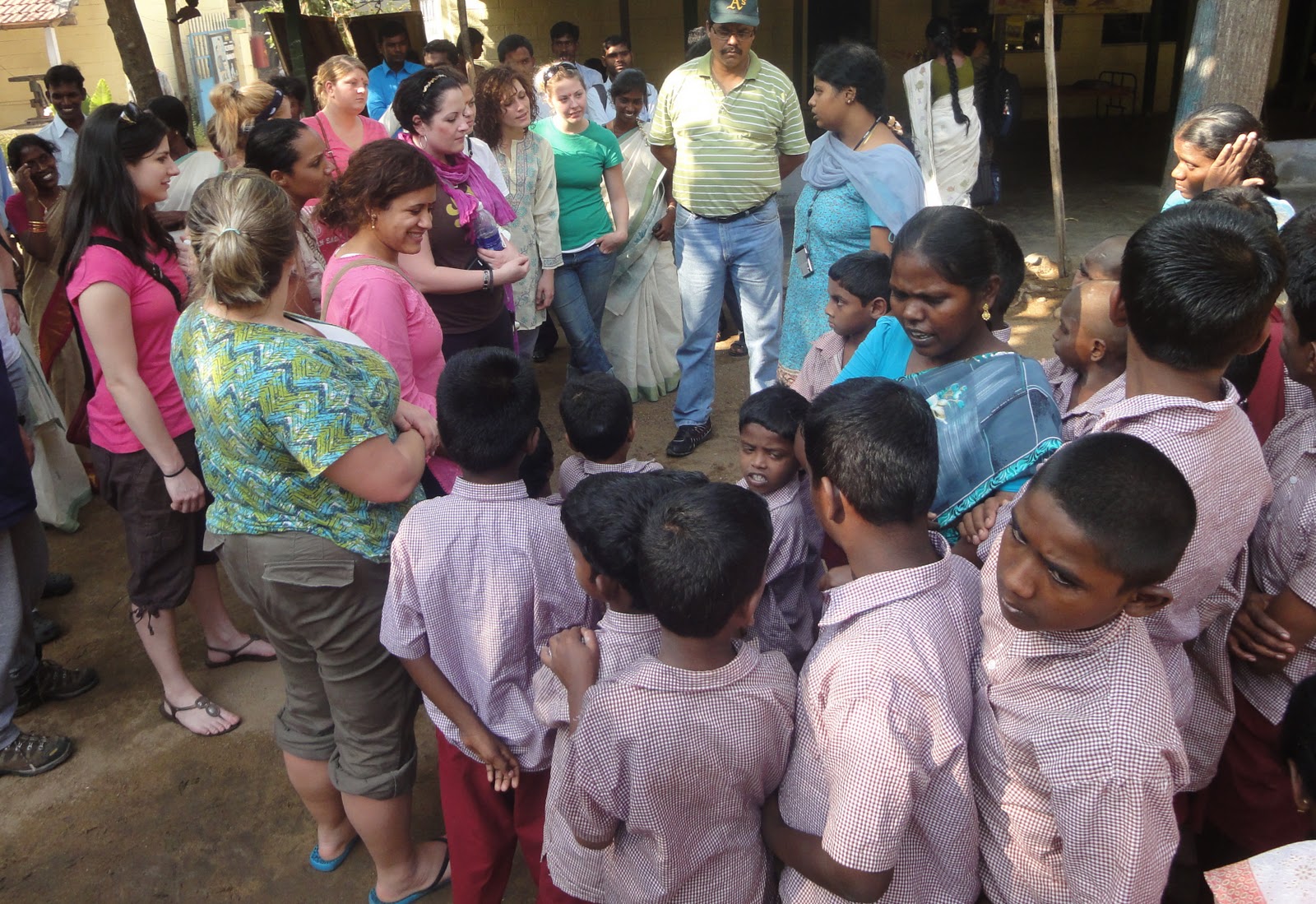
TIRUCHI the 5,March: “Training in toileting, grooming, eating and other Activities of Daily Living, Quality Academic Skills, Communication Skills, Life Coping skills, Vocational Skills and Provision of Balanced diet for intellectually Challenged children in Special Residential Bridge Course under SSA imparted in ‘Arivu Sudar School’ of  SEVAI, a Trichy based NGO is run with quality performance of sphere standards’’ said Junie Kacer, a Master of Social Work student while  summing up the interaction between students of Marywood Univesity, Pennsylvania, U.S.A and Special Educators / intellectually challenged inmate 40 children of Society for Education, Village Action and Improvement , (SEVAI) on the 4th March after visiting the school in Allur and its facilities and care given. The international visit by a delegation of 20 students from the School of Social Work, Marywood University was a study tour and a launch pad for possible collaborative activities in the future, according to Dr.Packiaraj Arumugham, Associate Professor, School of Social Work, Marywood University, and Dr.K.Govindaraju, Director, SEVAI.
‘Arivusudar, the school for intellectually challenged of SEVAI is all about strong conviction and social values. It is a brief compilation of the spirit and endeavour of one individual wholly committed to keep this flame of conviction and values alive through Arivusudar, the school for the intellectually challenged children. In this school, the intellectually challenged children have been provided with a new meaning for their existence and a capacity for facing life within their capabilities without the fear of discrimination and ridicule. The handful of dedicated teachers who share a common vision of seeking a better world for these lesser-gifted children, with their untiring work, love, compassion and an infinite patience deserve appreciation’ said Dr.Jude Gonsalvez, Assistant Professor, School of Social Work, Marywood University, the coordinator of the study tour program.
Ms.Xyian Stephen, Education coordinator of SEVAI enlightens the team that each child is trained according to his/her abilities. The end result is astonishing that every child here is a child, perhaps, not a child endowed with all the normal capabilities but still a CHILD. This child is not a curio, an exhibit; it is a normal child with feelings inside like any of us. We accept them as they are. Ms.Xyian Stephen further added SEVAI imparts training so as to make every child self-reliant and reduce the burden for their parents. There are around 40 special children belonging to low income families trained by the school. The school provides academic, vocational, medical and psychological support to the children and their parents for Mildly, Moderately, and severely mentally challenged.
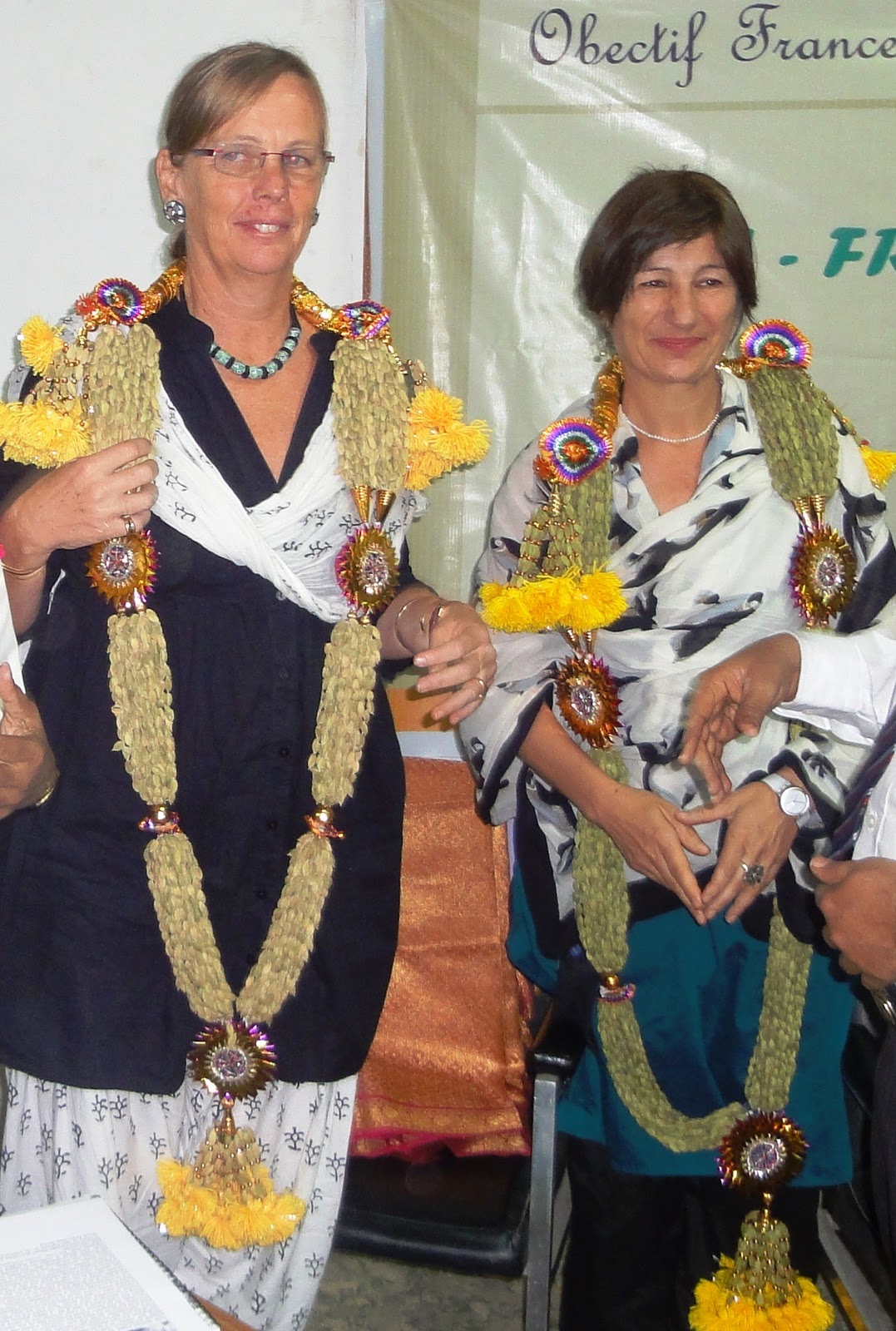
Mrs. Maria Kulanthai, the Principal care taker of these children said that  the  school concentrates on self help skills and self-hygiene for the children,  Need based training for every child,  Motor activities and development,  Physiotherapy for spastic children,  Language skills – speech therapy,  Reading and Writing skills,  Arithmetic – Time and Money concepts,  Psycho-social intervention for parents,  Parental Counseling for handling the children,  Guidance and Vocational Training,  Yoga & Medical care by qualified doctors, and  Sports and Physical excellence encourages their children to play games and dance to music so as to achieve holistic development of the children. Earlier the SEVAI team gave traditional welcome to the teachers and after the interaction the team left for Allur to visit Panchayat Level Federations.NNS

Saturday, March 5, 2011

Inclusive Education is ‘Team-teaching’ Dr.K.Govindaraju

Inclusive Education is ‘Team-teaching’, said Dr.K.Govindaraju, Chairman, South Zone Board of Continuing Education while addressing special educators in Trichy. Dr.K.Govindaraju was addressing a workshop for Special educators those work in Inclusive Education under SSA in Trichy those are working in inclusive education namely IED under SSA.Dr.K.Govindaraju further said ‘Inclusive Education requires Team-teaching, teaming, co-teaching skills and an organizational and instructional arrangement in which two or more teachers work in the same classroom in an inclusive class room. Team teaching requires teachers to share, cooperate, and agree on methods of instruction. These teachers must assume responsibility for all the teaching functions described above but also agree about materials, discipline, evaluation, supervision of classroom aides, and other matters. Inclusive Education is ‘team work’ – a responsibility shared by the whole school in which the class room teacher assumes the role of the co-ordinator in providing educational services. This team work along with the parents, peers and professional enhances the Children with Special Needs (CWSN)  functioning level to their optimum level in a Inclusive set up’s. The challenge ahead of us is facilitating a co-ordinated effort of the team support and sustain those available supportive services within the class room set up’s. A few teachers are not prepared to facilitate such extensive collaboration and most schools are not structured to participate to the extent necessary, schools tend to produce standard products and standard services, so deviations from the norm to engage in team teaching can be problematic at first’. Inclusive Education is a flexible and individual support system for children with special educational needs. Inclusion is not integration of disabled children from where they are, to a regular school but providing more options for all CWSN’s a structuring school where all children can learn including disabled children. Inclusive Education recognizes values and respects differences in learning among children. It ensures equal access to education to all children using instructional material to meet the needs of all CWSN by regular class room teachers. In Inclusive Education the CWSN are part of the whole school system and their needs are met in the General School System.
The chairman also spoke that ‘Disability Management involves a comprehensive addresser of various issues such as Prevention, Early Identification and Early Interventions services with Multi disciplinary team in making Inclusion a meaningful process in including Children with Special Needs (CWSN) in general school system. This team work along with the parents, peers and professional enhances the CWSN functioning level to their optimum level in a Inclusive set up’s. The challenge ahead of us is facilitating a co-ordinated effort of the team support and sustain those available supportive services within the class room set up’s. Disability Management involves a comprehensive addresser of various issues such as Prevention, Early Identification and Early Interventions services with Multi disciplinary team in making Inclusion a meaningful process in including CWSN in general school system. The children functioning in the areas including motor, sensory, cognition, communication, socialization and recreational area are carried out through formal and informal methods of assessments. This can be done by observations, interviews with parents, using questionnaire, home visits of the child performances etc... This base line will provide the school teacher a platform for assessing the level and the needs of the child in the areas of Communication, ADL’s, Socialization, Academic and Recreational. The outcome of the Workshop should address the needs of the regular class teacher and capacity building them towards effective management of CWSN in an Inclusive class set up’s, as an integral component of the overall effective management of CWSN in regular class room set up’s by the regular classroom teacher in providing appropriate education support services to CWSN’s’, Dr.K.Govindaraju added. Mrs.P.Chitra, Project Director, in her presidential address said’ As per the human rights, every child has the right to equal participation and the right to be educated as a regular school. Education is a right, it is not a privilege. Every child should be able to attend school in his own neighborhood school where his amblings may attend. There is an urgent need to train our special educators and also regular teachers to suit the inclusive nature of our Schools’. Earlier IED coordinator of SEVAI, Dr.R.Deivakumar welcomed the participants and Special Educator Pradeepa Rose proposed vote of thanks.EtNS.


Friday, March 4, 2011

"Special Trichy Region Olympics Bharat" for intellectually challenged people at Trichy during 25-27, February, 2011- J.Paul Devasagayam

Trichy: 3, March: The State chapter of Special Olympics Bharat of Tamilnadu will organise "Special Trichy Region Olympics Bharat" for intellectually challenged people at Trichy during 25-27, March 2011. The Area Director of SOB- Tamilnadu, J.Paul Devasagayam, told presspersons here on Thursday that over 400 intellecturally challenged children spread over 4 districts would take part in the Special Olympics in Trichirappallai Stadium. Apart from the participants, 100 escorts, over 100 volunteers, 20 physical education trainers, and physical directors would work for the smooth conduct of the event, he added. ‘The main events at the Special Olympics include athletics, basketball and skill contest, football and skill contest, volley ball and skill contest’ he said. The participants would be divided into three groups based on their age. While those between eight years and 11 years of age would be included in the first group, those between 12 years to 15 years of age, and those above fifteen years would be included in the next two groups, respectively.
Earlier Trichy district Olympic office has been launched at Kalaiarangam premises of District Welfare Committee. The office was inaugurated by Mr.K.N.Ramajayam, a noted sports promoter and Chairperson of Tamilnadu Basket Ball association and Member—Patron of Trichy District Welfare Committee. Mr.K.N.Ramajayam also said that he would provide necessary help for the successful conduct of Special Olympic in Trichy and he would extend his fullest cooperation to the Trichy District Chairperson of SOB-Trichy District, Sevai Govindarajan.J.Paul Devasagayam launched the Social online Radio/TV Etram for children especially for differently abled and unified schools. J.Paul Devasagayam enlightened the participants that Special Olympics is an international programme of year-round sports training and athletic competition for more than one million children and adults all over the world having its headquarters in Washington D.C having its philosophy of Special Olympics as founded on the belief that people with mental retardation can, with proper instructions and encouragement, lean, enjoy and benefit from participation in individual and team sports.
The local committee took and decision to organize a family get together of parents of intellectually challenged children on the 12th of March on the occasion of World Women’s day week. Dr.K.Govindarajan, Chairman, Trichy Special Olympic mentioned that the 7 girls selected for Special Olympic from Trichy to be held in June 2011 are being given Rs.1000 per month maximum of Rs.5000 per students for the consumption of nutritious food as a part of the preparation of the Special Olympic to be held in Athens. Mr.Santhakumar, Spastic Society of Trichy and NGO heads and office bearers of Special Olympic and target students participated in the consultative meetings conducted in Special Olympic Office in Trichy. Earlier Revathy welcomed the gathering and Xyian Stephen, the Radio program director in her vote of thanks address said ‘with the growth of the Internet and advances in online telecommunication, we feel the time is right to introduce an online radio stations with news, information, and support, for persons with disabilities, this online communication expects  people around the world to change the way they look at disability - to think and act differently, and to make a positive difference to the lives of people with disabilities.’ -EtNS.

Wednesday, March 2, 2011

Amoor cottages place of attraction for holidays in South India.


Amoor cottages are source of energizer for holidays in South India. Amoor cottages are situated in Amoor of Trichy District of Tamilnadu and this is a small village located about 26 Kms North-West of Srirangam on the Trichy-Namakkal-Salem highway on the Northern banks of Cauvery near the Upper Anaicut (Mukkombu, Mukkombu is a beautiful River Cauvery view centre located in the outskirts of Trichirappalli in a distance of 14 km from the city Trichy. One can stay in Amoor cottage just for one night, as a stop-over in one’s trip in South India, but you can especially benefit from our package tour to learn about Indian traditions and culture. Through typical activities, you will encounter national birds, local craftsmen and craftswomen and much more: Discovery of local agriculture (banana fields, rice fields…) Enjoying local delicacies on banana leaves, Sharing time with women of the village who work in Self Help Group thanks to micro credit system, Handcraft shops visits (mat weaving, pottery), Discovery of the surrounding nature, Shanti school visit, Hinduism initiation by the Brahman of the village. Mukkombu has various attractions such as amusement park, children’s garden, sports facilities, fishing facilities, etc. Mukombu, the upper dam constructed across the river of Cauvery and Kolladam is an added attraction. Boating and fishing is conducted in the upper uncut. We can reach the other bank of Cauvery by crossing the dam. With its cool atmosphere and green surroundings Mukkombu serves as a perfect destination for peace and retains the culture of the hamlets all along the both side of River Cauvery) The Amoor village is 3 mile away from Mukombu in the northern back of River Cauvery and one Km from the famous temple town Gunaseelam (Gunaseelam Vishnu temple is located in the banks of Cauvery in Trichy-Salem route around 15 km from Trichirappalli. Gunaseelam Vishnu Temple is one of the oldest and important vaishnav temples in south India. Gunaseelam is considered as south Tirupathi and people give their offering that they used to offer to Lord Balaji at Tirupathi. People consider Gunaseelam as a place with sanity and have the power to cure physical and mental illness. Due to this belief, mentally ill people are taken to Gunaseelam temple and kept there until they become normal. Gunaseelam is located in the midst of beautiful coconut groves and green paddy fields).  Amoor is ancient village which falls in Trichirappalli District (Tiruchirapalli is shortly referred as Trichy. Trichy is located on the Cauvery river banks. Trichy is the fourth biggest city of Tamil Nadu. The early Cholas sited Trichy as their citadel. Trichy gives an absolute combination of tradition and contemporary surroundings. There are several churches, colleges, missions, and temples dating back to 1700s. Trichy airport has regular flight services to Chennai and Bangalore. Chennai (316 km) and Bangalore (337) are two major airports nearest to Tiruchy. These airports are well connected with all airports in India and many cities abroad. The town in Trichy was built by the Madurai Nayaks. Trichy is an eminent place as it has bestowed with impressive Tamil scholars who have contributed significantly for the Tamil literature. The festivals are celebrated with great pomp and grandeur. The holiness of this place can felt during each occasion. Trichy is a flourishing commercial hub of Tamil Nadu. The rock fort is the landmark of this magnificent holy city. Trichy is popular for artificial diamonds, glass bangles, handloom cloth, cigars and clay toys. It has spectacular monuments and temples making it a divine and pleasant place of visit). The village (Amoor Agraharam) is sanctified by continuously celebrating the Sri Ramanavami Utsavam since year 1837 (Tamil: Year – Hevilambi, Month – Chitra).The utsav was started and celebrated in a small way in one of the villager’s house by the then mukhya pramukhs of the village, namely; Sri Venkatachalam Iyengar (Sri Ramudu Josier’s father), Sri Abbai Iyer (alias Annasappa Rama Iyer) and Sri Subramania Iyer (Sri Natesa Iyer’s father). The utsav is celebrated for ten days during the period of Ramanavami with the same old photograph of the Bhagwan. Generation to generation, year after year; this utsav is ritually celebrated to this date. The upper dam constructed across the river of Cauvery and Kolladam is an added attraction. Boating and fishing is conducted in the upper uncut. We can reach the other bank of Cauvery by crossing the dam. With its cool atmosphere and green surroundings Mukkombu serves as a perfect picnic destination for thousands of people in the neighboring districts. Gunaseelam-Amoor East is a famous Vishnu temple near Trichi, India. An unusual thing about this temple is that mentally challenged people are taken to the temple and kept around it for years, in the hope that God will cure the illness. The etymology of the name derives from "Gunam" (Cure) and "Seelam" (Place), meaning the place in which all illness are cured. This temple is around 20 miles from Trichi. Of the Vishnu Temples, Gunaseelam stands out as the first and foremost among the Abhimana Sthalams, just like Srirangam being the prime among the 108 Divya Desas. The deity of Thirumalai Thirupathi, Sri Thiru Venkatamudaiyan, sung by many a saintly poet, called Alwars, and even by Elango Adigal in his Silappadikaram, appeared as fruit for the ardent prayer of Maharishi Gunaseelar in this small village, situated on the outskirts of Tiruchirapalli. The Amoor/Gunaseelam villages itself attained the name of Gunaseelam after the Maharishi. Gunaseelam is also called the South Tirupathi, and devotees submit their offerings as part of their prarthanas made to Lord Srinivasa, the Lord of Seven Hills at Gunaseelam Lord's altar. The scepter that the Lord holds in his right hand is the instrument with which he cures the mental and physical afflictions of the ailing and alleviates the distressed from their sufferings. The pleasant and clean little thatched-roof houses provide power and running water. The huts are made up with a front door balcony, a room and an attached bathroom in western style.In all the huts, fans are fitted and the beds are covered with a mosquito net. Every hut is designed especially to accommodate 2 persons but in case of needed, there is enough space for an extra-bed for a third person with the cultural background of Tamil Population.The main objective Is to present the area of Trichy in an alternative manner by living side by side with locals and to give the opportunité to visit SEVAI(www.sevai.in), the first NGO in Tamil Nadu.Indeed, one will get in touch with another culture in a responsible and fair way with a people-centered approach. Moreover, one can participate in the development and the prosperity of the local communities since 100% of the profits will be used to drive education and women projects within SEVAI.  A bumpy bullock cart ride, a diffusion of intricate kolams, SEVAI women projects like livelihood promotion activities, quality of life improvement and equivalency Education and development projects and organic farming are the areas of attraction as these have been promoted by SEVAI and local Self Help Groups. “What I love best about India is the warmth of the people. They make immediate eye-contact and you feel an instant connection with them,” said a noted French Poet Roseline from South France. ‘Amoor-Gunaseelam-upper dam’ is one of the most popular Heritage destinations in Trichy .With large number of domestic and foreign tourists visiting Trichy throughout the year and especially from October to March. i. Accordingly a number of budget Hotels in Trichy have come up to provide decent, comfortable accommodations to the visitors. The Accommodation in Amoor gives you the opportunity of traveling around villages and rural project and Trichy city. SEVAI is going on an aggressive note to promote Eco and cultural Tourism by organizing “Amoor Utsav” every year. Et.News Service.

Games are compulsory in every school as physical development along with mental development is essential


The Annual Sports Day and Prize distribution ceremony was held at SEVAI Shanthi Matriculation Higher Secondary School, Pettavaithalai, Trichy, India. Ms.Xyian Stephen, Admistrative officer introduced the guest of honour from AEM, Mr. Maurice and Mr. Roland. Mrs.Mallika, the Principal of the School welcomes the guests of honour and said that ‘Games are compulsory in every school as physical development along with mental development is essential. Much to the joy of each student the Sports Day is one of the major events in the school. Every year SEVAI Shanthi Matriculation Higher Secondary School celebrates the Sports Day in the month of February. There is a big playground where the event takes place. The preparations are made much in advance. A day earlier the tent is put up. Chairs are arranged in rows along the boundary wall of the ground so that the invited parents and non-participating students can sit and watch the happenings.’
The Chief Guest Mr. Maurice from AEM France unfurled the flag in the presence of Mr. Roland Cremdoss. He gave a short encouraging speech and declared the sports meet open. The function began with the march past of all the participating students in their smart uniform dresses. Then the race began. Our sports teacher blew the whistle for the race to begin and another teacher noted the time with the help of a stop watch. There were 100 metres, 200 metres races. The most interesting race of 50 metres was specially held for the tiny-tots of the school. Everyone enjoyed the scene and cheered the little ones. Funny events like potato race, lemon race, three legged race and sack were a lot of fun.
After this there were the high jump and long jump events. Another exciting event was the tug of war between the students and the teachers. Everyone eagerly watched this new event as students continued to pull hard to win.Mrs.P.Chitra, Project Director, SEVAI declared open the cultural events of the students. Boys enacted thrilling gymnastics and girls and kids performed events of social interest and cultural heritage of Tamilnadu. At the end the Chief Guests from AEM, France distributed the prizes to the winners. Vinod was declared the best athlete of the year. He won four prizes. Mr.Maurice praised al the athletes and congratulated the winners. Refreshments were distributed to all the students and the guests. Sports Day was thus full of fun and excitement. Mr.Kannan Physical Education Director made arrangements for the sports events and Kokila, Prabha and Bhakyalakshimi made elaborate arrangements for sports related cultural events. School Management shared pleasantries among the teachers and taught of the school.

‘Young Players should work hard and give their best to revive Indian Hockey’


TIRUCHI: 28:K.N. Ramajayam, Patron of Unified Tiruchi District Hockey said ‘‘Young Players should work hard and give their best to revive Indian Hockey He visited the recently inaugurated “The Rs. 3 crore-facility established by the Sports Development Authority of Tamil Nadu to match international standards for   hockey in Anna Stadium, Trichy. He appreciated Dr.Kalaiselvan; district Sports officer, Trichy for his hard work for developing sports activities in Trichy District. International special Olympic volunteers said that extensive planning and execution had gone into institution of the facility with peripheral drain and storage sump, surface leveling, and blacktopping of the hockey ground and laying of turf. A  British professional sports installer along with a technical team had laid the turf and turf was imported from The Netherlands. P. Kalaiselvan, District Sports Officer thanked the authorities for establishing a hockey ground facilities to international standards in Trichy.

Tuesday, March 1, 2011

Adapted sports offered by SEVAI for children with special needs-Dr.K.Govindaraju


SEVAI (www.sevai.in) Professionals under Inclusive Education for differently abled recognize the importance of sports and recreation in the successful rehabilitation of individuals with disabilities. When first faced with the reality of a disability, many experience a loss of confidence, depression, and believe their lives have ended. They are often alienated from family and friends because there are no shared positive experiences. Adapted sports and recreation offers the opportunity to achieve success in a very short time period; to use this success to build self-confidence and focus on possibilities instead of dwelling on what can no longer be done. The ability to participate in a sport, such as cycling; skiing; and sailing, to name a few, provides the opportunity to reunite with family and friends in a shared activity. Competition improves sports skills. It allows individuals to experience the excitement of competition and the thrill of victory, as well as the agony of defeat. Disabled or disability sports are played by persons with a disability, including physical and intellectual disabilities. Many of these are based on existing sports but modified to meet the needs of persons with disabilities; they are also referred to as adapted sports. However, not all disabled sports are adapted; several sports that have been specifically created for persons with a disability have no equivalent in able-bodied sports. While sport has value in everyone's life, it is even more important in the life of a person with a disability. This is because of the rehabilitative influence sport can have not only on the physical body but also on rehabilitating people with a disability into society. Furthermore, sport teaches independence. Nowadays, people with a disability participate in high performance as well as in competitive and recreational sport.
The number of people with disabilities involved in sport and physical recreation is steadily increasing around the world with organized sports for athletes with disabilities divided into three main disability groups, sports for the deaf, sports for persons with physical disabilities, and sports for persons with intellectual disabilities. Of late organizations began to include athletes with disabilities in sporting events such as the Olympic Games and Commonwealth Games. However, many sports are practiced by persons with a disability outside the formal sports movements, for example: Wheelchair basketball, Wheelchair dancing, Weightlifting, Swimming, and many other sporting activities one can join if one is mentally or physical disabled. The demography of disability is very difficult as counting the number of persons with disabilities is challenging because disability is not just a status condition, entirely contained within the individual. 
Mr.Roland and Mr.Maurice of AEM France appreciated the children those participated in school sports day.
Rather, it is an interaction between medical status and the environment. Disabilities make it harder to take part in normal daily activities. They may limit what a person can do physically or mentally, or they can affect the senses. Disabili.ty doesn't mean unable, and it isn't a sickness. Most people with disabilities work, play, learn, and enjoy full healthy lives.
Invisible disabilities, also known as hidden disabilities, are a disability that may not be immediately apparent. For instance some people with visual or auditory disabilities, who do not wear glasses or hearing aids, or discreet hearing aids, may not be obviously disabled. Some people who have vision loss may wear contacts. A sitting disability is another category of invisible impairments; sitting problems are usually caused by chronic back pain. Those with joint problems or chronic pain may not use mobility aids on some days, or at all. Invisible disabilities can also include chronic illnesses and conditions such as renal failure, diabetes, and sleep disorders if those ailments significantly impair normal activities of daily living.’ Disabled' is an identity that one is not necessarily born with, as disabilities are more often acquired than congenital. ETNS