Wednesday, September 27, 2017

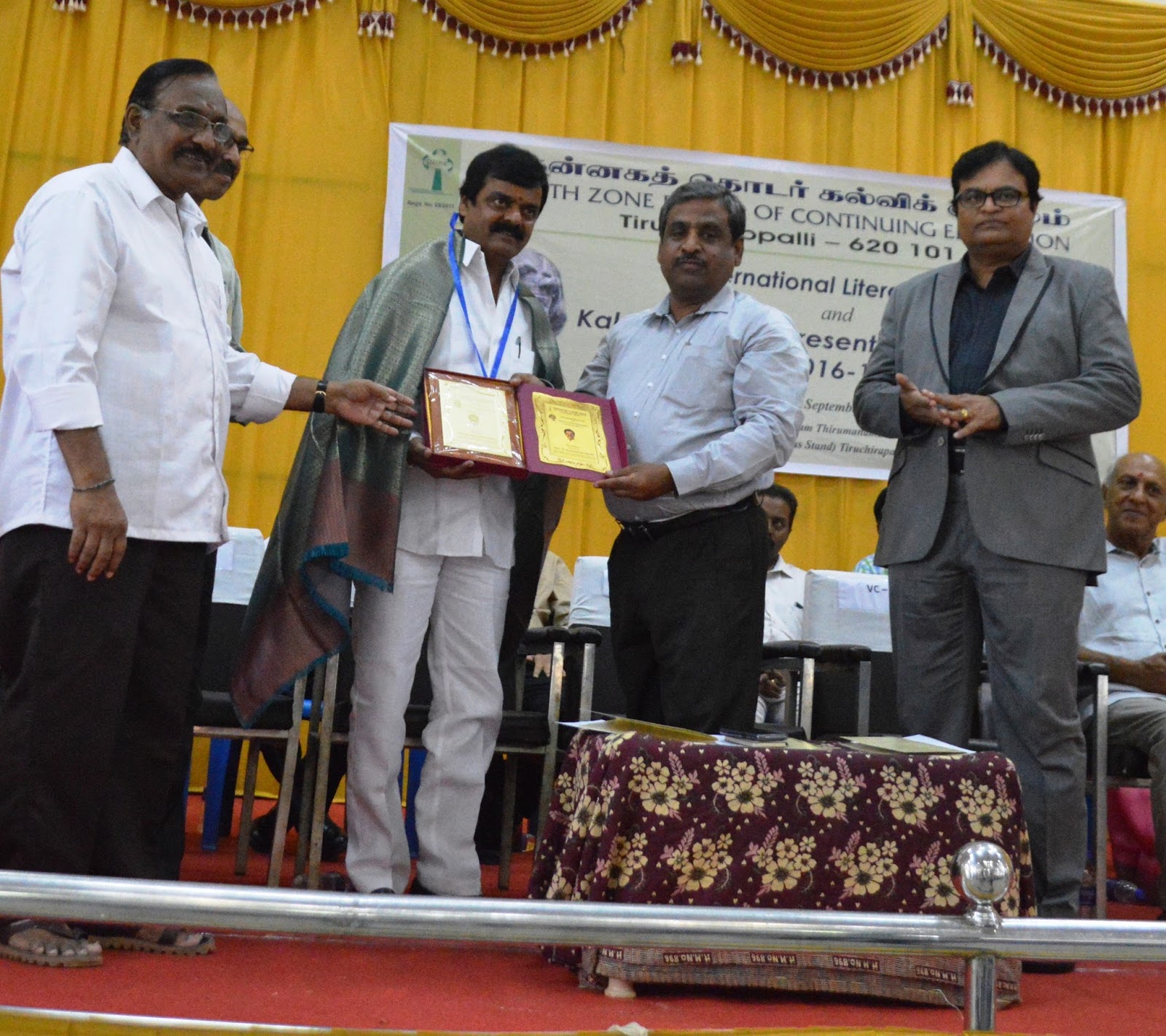
Kalam Award for Knowledge Connectivity 2016-17. Citation A.S.Sankaranarayanan,Managing Trustee of NMCT.

Knowledge Connectivity Kalam Award presented to NMCT 
NMCT is a Non Profit Organization registered as a Public Charitable Trust in the year 1988 under the Indian Trusts Act 1882.It covers the Geographical areas of Coimbatore District as regards to Integrated Livelihood Supports for Tribes, Care & Support for the HIV infected families, Health and Nutrition Education for Women & Children. Both Coimbatore and Tirpur Districts are covered for Targeted Intervention for Migrant Industrial Workers. Silai School Project covers 10 Districts namely Coimbatore, Tirpur, Erode, Krishnagiri, Dharmapuri, Nilgris, Dindigul, Karur,and  Namakkal. .The areas of Environment Protection, Education, Health and Livelihood Development are focused on long term commitment with an integrated approach to address the underlying Social and Economic causes.
NMCT has been focusing on achieving maximum impact in the areas of Health interventions and Livelihood generation. Around one thousand families infected by HIV/AIDS have been provided with care and support for treatment services, nutritional food supplements and health care activities in 8 blocks of Coimbatore district. The health and nutrition education in Anamalai block covering school and community children, adolescents & women has impacted thousands of children, adolescents and women in practicing healthy lifestyle through regular nutritious food. The targeted interventions among the migrant industrial workers in Coimbatore and Tirupur districts by and large supported and supplemented the efforts of the Government initiatives in reducing prevalence of HIV/AIDS in the above districts. The South Zone Board of Continuing Education appreciates the above projects implemented by Shri.A.S.Sankara Narayanan.
The South Zone Board of Continuing Education takes pride in conferring upon   Shri.A.S.Sankara Narayanan, Managing Trustee of NMCT, the Knowledge Connectivity Kalam Award for the year 2016-17on 25 th September 2017 at Kalai arangam Triumanamandapam, Trichy on the occasion of International Literacy Day Celebration.

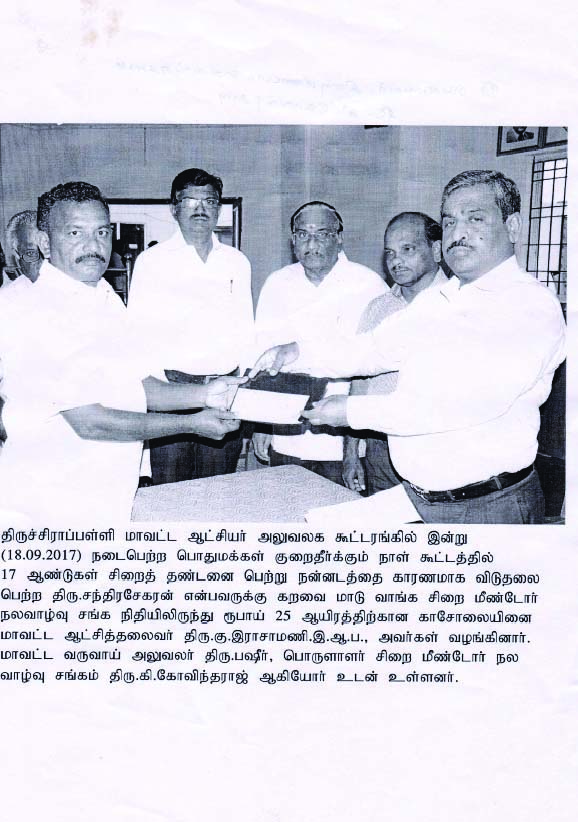
.South Zone Board of Continuing Education presented its KALAM AWARDfor Community Outreach To Lion.Dr.P..Venkatraman Karaikal

Kalam AWARD Presented to Dr.P.Venketraman by Collector Trichy.
Sevai Chemmal Lion .Dr.P.Venkatraman, MJF is involved in a variety of fields that impact community welfare, such as Consumer Concerns, Alternate medicines, Indian Red Cross, Environment Protection and so on. He is actively associated with equally different service organizations like Exonora in Tamilnadu and Puducherry regions; TarumaiAtheenam, Lions Club (District Governor of the region covering 8 revenue dist of Tamilnaduand Puducherry includingKaraikal.
MrVenkatraman has worked hand in hand with Swiss Red Cross and has contributed towards building up of 2500 houses for fishermen community. He has direct involvements in
water and sanitation projects; Waste to wealth  programmes;
As a dist Governor 324A2 of lions international  he has contributed establishing 5 rural dialysis  centers.South Zone Board of Continuing Education is proud to present its KALAM AWARD for Community Outreach to 
Lion .Dr.P.Venkatraman, MJF, Karaikal.-OZONE-25.9.2017, Trichy.


Mr.M.Ramachandra Reddy,Chairman of the Advisory Committee,Central Adoption Resource Authority (CARA),Ministry of Women $ Child Development,Government of India.

Chairman CARA was presented OZONE Memento by Trichy District Collector.
Mr.M.Ramachandra Reddy,Chairman of the Advisory Committee, Central Adoption Resource Authority (CARA),Ministry of Women $ Child Development, Government of India.The Central Adoption Resource Authority (CARA) is a statutory body of Ministry of Women & Child Development, Government of India. It functions as the nodal body for dealing with all matters related to adoption of Indian children and is mandated to monitor and regulate in-country and inter-country adoptions. CARA primarily deals with adoption of orphan, abandoned and surrendered children through its associated /recognized adoption agencies.CARA is the designated as Central Authority to deal with all inter-country adoptions in accordance with the provisions of the Hague Convention on Inter-country Adoption, 1993, ratified by Government of India in 2003.
He spoke on World Literacy Day organised by South Zone Board of Continuing Education and insisted about the importance of Literacy and Mr.M.Ramachandra Reddy appreciated the initiatives of NGOs Forum South Zone Board of Continuing Education for the development of poor and needy. In his address:Literacy Day is normally celebrated at National and International levels every year on 8th Sep. I am very happy to participate in the Literacy Day Function very grandly organized by the South Zone Board of Continuing Education at Tiruchirapalli today. Today marks the birthday of Pandit Deen DayalUpadyaya who served for uplifting people and India. It is highly appropriate that South Zone Board of Continuing Education has organized this important event on this notable day of great Upadyaya’s Birthday.
I appreciate the efforts of the Organization in recognizing reputed individuals who have selflessly served the community for long periods. I am also happy to find that several Awards in the name of one of our great Former Presidents Dr Abdul Kalam are being conferred upon distinguished individuals. This kind of recognition will serve as great encouragement to all the awardees in their works in future.
In a country like ours, development can take place easily only when all our people become literate. There are still large sections of the people- mostly in rural areas and women in the population - who are still outside literacy coverage. It is true that Governments take efforts to build schools and help primary school enrolment. That alone may not help. We all know that poverty eradication and good quality of life will be possible only through success in literacy efforts.
NGOs and all sections of the society should also participate in spreading literacy. Such participation will strengthen Governments’ efforts and will also help reduce the percentage of illiterate among the population. Let us all-in all possible ways- help spread literacy among rural population, women population and those who are not able to have any benefit of schooling. A literate nation will be a powerful nation. Help build such power in our country.

South Zone Board of Continuing Education Award- Quality of life Improvement KALAM Award conferred on Mrs. Jaya Vedachalam,CARD,Pudukottai

Citation
TNOU V C presents  Mrs.Jaya Vedachalam KALAM AWARD
South Zone Board of Continuing Education Award- Quality of life Improvement KALAM Award conferred on Mrs. Jaya Vedachalam,CARD,Pudukottai .Mrs.JAYA VEDACHALAM, of the Community Action for Rural Development (CARD), Pudukottai heads the leading non-governmental organization engaged in the fields of health, education and rural development for the past 30 years in Tamilnadu.The Treatment cum Rehabilitation Centre for Drug and Alcohol Addicts is a flagship venture of CARD and is ably stewarded by Mrs. S. R. Jaya, as its Managing Director. She has 35 years of experience in rural development. CARD is working in Pudukottai and Karur Districts of Tamilnadu and is also running a Polytechnic College. The organization focuses on the health and education of school children and college students and thus is engaged in grooming the rulers of the future.

Friday, September 15, 2017

SEVAI Shanthi Matric Higher Secondary School celebrated AVVAIYAR Day

SEVAI in Avvaiyar Way....
SEVAI Shanthi Matric Higher Secondary School celebrated AVVAIYAR Day recently and Tamil Teacher Kavitha spoke on this occasion and delved a speech highlighting the value of Avvaiyar poems and its applications in all time life and narrated further, “Tamil Language is an ancient language and also it is categorized as a classical Language. The language generated lots of wonderful scholars whose works had been translated into different other foreign languages. 'Granny Avaiyar' who was an exceptional poet. AVVAIYAR IS the poetess of the Tamil country who lived thousands of years ago, propagating the fragrance of Tamil literature and also speaking about morality and spirituality. She acted as a messenger between the warring Tamil kings and brought peace among them. Avvaiyyar was a notable female poet of the Ninth century. She is popular for her amazing poetry which contains moral instructions. She was also a respectable and noble saint of that time. Her poems are still has the importance and popularity in Tamil Nadu. Most of the children learn her poetry during their education in Tamil language. Avvaiya means respectable old lady or Grandmother.Avvaiyar lived during the time of Kambar and Ottakoothar. Tamil people describe her as an intelligent old lady. She wrote many poems that has moral value and importance till now. Even many of her poems are included in the school text books of Tamil Nadu. These morals are arranged in simple and short sentences that are useful for daily life. From the childhood, Avvaiyar was fond of Lord Ganesha. She always does her prayer for the blessings of poetry, music and drama. When she grew up she accomplished her education and became highly talented in the field of poetry. Her inner qualities increased and complement her intelligence. Avvaiyar was interested and showed deep passion towards poetry from the early age. Those poems are easily understandable and people love to remind her poems.After this change, she began her journey as a traveler and observed the life of common man. She used her knowledge, inspiration and social ethics into her poetry. She had lots of love towards the common man and she admired their simple life. Her poems tell us about the common people and their life. She also included few morals, dos and don’ts’, simple ways to live a happy life etc. She wrote several poems for youngsters like you to abide by a strongly disciplined life. Granny Avvai's poems such as 'Aaththisoodi', 'Konraiventhan', etc which have been served as pleasant simple poems that instruct youngsters a great deals about living in the right way. Here
Respect to Avvaiyar by women Groups

are some of the short words poems of the Granny Avvaiyar:'Mathiyathar Thalai-vasal Mithiyaathey' means 'Never step-on the doorsteps of those who do not respect you'. 'Enn-Eluththu Ihalel' means 'Never, ever ignore the importance of learning''Eeatpathu Iehalvu' means 'Begging is a disgrace' (and so work hard to earn).She has been applauded by everyone as an excellent female poet of all time that the Tamil language found.-Don't wait for a return benefit as to when a good deed done will pay back, but be just like that tall and erect coconut tree that drank water from its feet gives the benefit of giving that sweet water by its head."- Kris

Thursday, September 14, 2017

Kinder garten teachers are to be more professional in handling kids of Kindergarten. - Chairman of South Zone Board of Continuing Education.

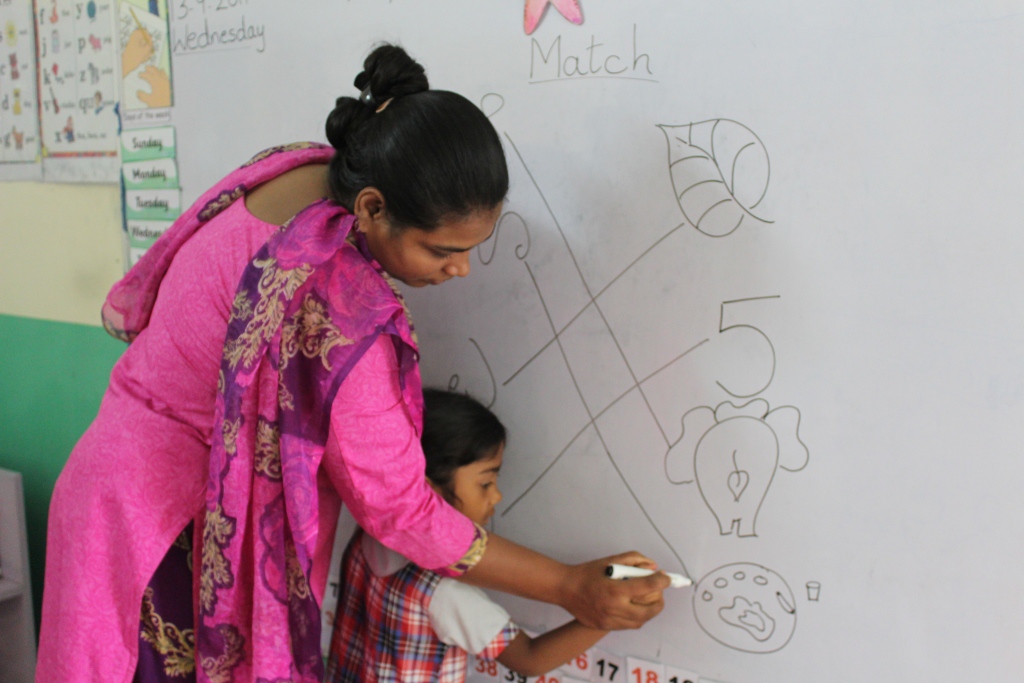
Hand holding support to kids of Kinder garden in Building Blocks School.
Kinder garten teachers are to be more professional in handling kids of Kindergarten. During training session of kindergarten teaching techniques training the Chairman of South Zone Board of Continuing Education K.Govindaraju enlightened the teachers, “Kinder garden teachers are to be more professional in handling kids of Kindergarten”. The Chairman further said, “Kindergarten is the first time most children are exposed to a classroom environment that's less about playing and more about sitting still, listening to the teacher and completing classwork. Teachers in kindergarten classrooms use several teaching methods to ensure that each student is learning what she needs to know. The same teaching methods are designed to help students who excel remain challenged, as well as to help students who are lagging behind catch up, because they incorporate a wide range of instructional strategies. If you believe that teaching your child to read and helping your child develop proficient reading skills is the key to future success and if you wish to help r children develop to their fullest potential. Young children are generally motivated to learn about everything. Unless they have been made fun of regularly, when investigating or presenting their knowledge, they usually have a strong desire to find out and share information. One of the best teaching methods is to motivate children by modeling enthusiasm and curiosity. Motivation comes from within and from outside. Making too much fuss of any one child can result in a competitive attitude in the class. Model curiosity and asking questions about the topics studied. When children have an opportunity to communicate their new knowledge to patient adults it helps solidify concepts. It often takes children time to find the correct words to explain their thinking and to supply the students with descriptive words as they are playing or working, This extends their vocabulary and increases their ability to share new discoveries. The Kinder garden teachers are to maintain a classroom atmosphere of warmth and acceptance. For some kindergarten children, the classroom will be one of the few places where their opinions and ideas have been heard and valued. Learning doesn’t happen if a child is over tired, hungry, upset, scared or worried. Learning is to be flexible and understanding with young children is a skill that will serve you well in your
Creative Kinder Garden teacher in B.B.School,Bangaluru
educational career. At times, children need to get away from everyone and be left alone. A small space, such as under your desk, works is well for some students who are too overwhelmed by home or other circumstances, to cope with their peers or their teacher. If a student is hungry, it’s easier to let her eat part of her lunch early or to provide a snack, than to try to force the child to concentrate on a task until the scheduled eating time. Most Kids often do not have the vocabulary to express themselves and teachers are to use reflective listening to help children understand what is upsetting them. Sometimes children work well in groups and this helps them learn to share and develop ideas and at other times they need to be alone with ample time to figure things out and to relax and have fun with your students.
The biggest challenge any teacher faces is capturing the students’ attention, and putting across ideas in such a way that it stays with them long after they have left the classroom. For this to happen, classroom experience should be redefined and innovative ideas that make teaching methods more effective should be implemented and teachers are to be trained in some innovative ideas that will help teachers reinvent their teaching methods and make their classes interesting. Teachers are to be trained in Creative Teaching, Use of Audio & Video Tools, “Real-World” Learning, Brainstorm, Classes outside the Classroom, Storyboard Teaching, Stimulating Classroom Environment, Welcome New Ideas, think About a New Hobby, Think About A New Hobby, Start School Clubs or Groups, and Introduce Lessons Like a Story. Kinder garden schools to take measures for improving the quality of teaching and learning, these innovative ideas are sure to make teaching methods more effective”. - Kris

SEVAI Vocation Educational Institutes provide skills for job-oriented courses as “Fit for job and fit for Life” is current slogan for employability of our emerging youth population.

Karuvi communiy vocational Institute students  arrival of the students.
SEVAI Vocation Educational Institutes provide skills for job-oriented courses as “Fit for job and fit for Life” is current slogan for employability of our emerging youth population. With support of Amis foundation and technical support of IGNOU SEVAI runs skill development centres 12o women in Karuvi and Kadambadi of Nagapatinam District based on the job requirement of the area. Vocational Skill development is necessary it should evolve according to the student's age to create ideal employees in the 21st century. SEVAI Director, K.Govindaraju spoke to the trainees on 13th September in Karuvi and enlightened, “In the changing world scenario with regard to industry and the job market, there is now an overpowering need for skilled workers. However, the definition of 'skill' in India, and the world in general, has also changed over recent years.  India is relatively young as a nation with more than 50 per cent of its population is below the age of 25. About 90 per cent of employment opportunities require vocational skills. Only 20 per cent of our graduates get employed. The rest are unable to get suitable employment due to the lack of employable skills. In the present context of globalisation, the demand for skilled and multi skilled workers has increased. Therefore in the context of developing countries, such as India, there is a critical need for quality skill development and training. Professional job-oriented skill Education and Training is an important element of the nation’s education initiative. In order for Vocational Education to play its part effectively in the changing national context and for India to enjoy the fruits of the demographic dividend, there is an urgent need to redefine the critical elements of imparting vocational education and training to make them flexible, contemporary, relevant, inclusive and creative. The Government is well aware of the important role of Vocational education and has already taken a number of important initiatives in this area. A vocational course, as the name suggests, aims to prepare students for a specific profession, vocation or trade. These courses are tailor made and quite direct in their purpose which is to make students completely job-ready. The term 'vocational' means 'work-related'. Vocational courses involve less of the traditional academic learning and more of hands-on training. Such courses focus on applying the skills learnt and are the ideal stepping stone from the world of education to a stable career. Getting trained for a particular vocation is always an added advantage for any job-seeker.  Having a certificate from an independent body which
states that those have the necessary skills to perform in a particular profession will always give
the youth trained that extra edge when they are out in the job market.  Vocational courses will
Hand Embrodairy work
improve the “employability”. “Of late, employability of graduates coming out of our educational system is becoming a matter of great concern. The following are some of the reasons why vocational training, is a very good form of education. Vocational graduates have better employment opportunities than graduates from academic schools. It goes without saying that getting an office job is a struggle. Technical programs typically include required core classes and electives that allow students to branch into sub-topics or specialty areas. This makes for a more focused learning experience than a bachelor’s degree that includes liberal arts requirements. Vocational school programs are typically shorter than a private or public college. Associate degree programs at community colleges or technical schools typically include two years of full-time study. The term ‘vocational’ actually means ‘work-related’. Some people are not aware that you can actually get vocational qualifications that will take you up to the same level as a degree, so the opportunities for continued personal development are still there, even if you don’t choose the conventional route. Vocational graduates have entrepreneurial skills. Vocational graduates possess good attitudes toward work; they are able to physically engage themselves from start to finish of a project. For students who have trouble with motivation and accountability, vocational courses offer an excellent chance to develop these vital skills. Vocational graduates possess necessary technical skills in their specialization.-Kris

SEVAI Moon School students are taught the importance of Patriotism.


Moon School students are trained in Patriotism

SEVAI Moon Schools of rural Tamilnadu are being trained in cultural program imbibing the values of Patriotism. The trainer enlightened the students of rural area that Swami Vivekananda wanted every Indian to be proud of his country and its heritage and study and assimilate the values in Indian culture, be proud of the cultural legacy, and then strive for further enrichment. He was convinced that a dynamic future with all-round excellence, both at individual and collective levels, can be built only through assimilating and enhancing the core cultural values that India has been nourishing all through her history. The trainer Speak highly about the country to the pupils and taught them to respect it and the national symbols like National Flag, National Anthem etc. The Moon School trainer further trained with the theme, “India is a land where great leaders were born who sacrificed their lives for the freedom of the country and quoted the real examples like the Mahatma Gandhi's picture on Indian currency notes or various roads/ airports named after some of the great leaders. There are special names given to the birth/death anniversaries of some of the great leaders like Martyr's Day on 30th January. The trainer further quoted in the cultural program the quotation marks of Rabinthinath Tagore “The country is not a certain area of land of mountains, rivers and woods, but it is the identity. Patriotism is the loyalty to that identity and the ideals that it represents. India has been the land of martyrs who have embraced the gallows for their ideals. Every drop of their blood is fragrant with patriotism and dedication to India. Our Students are taught to follow the path of these martyrs and to be accountable for
Cultural Heritage performance by School students
their work, the value most needed for Democracy to work in the right sense”.
The present generation needs the sense of patriotism and its pride. Our nation should have full of citizens the feel belonged to their country, India. So it is imperative for parents to try to develop sense of patriotism in their children. The Indians scattered all over the world would come together even after so many generations because of strong sense of nationalism inherited by them from their forefathers. Developing a sense of patriotism begins with studying history. History should be studied in a global context not only as an academic subject to get good marks in but as a source to develop patriotism. The parents and teachers should imbibe the same outlook then only they can change way of thinking of children. The Moon school children are encouraged to study about our freedom fighters so that they can develop love and respect for our nation, India. The cultural programs are rehearsed making the school kids aware of their Rights as well as their Duties. The cultural events emphases “If living peacefully is our Right, then letting others live peacefully are our Duty. We should not take the law in our hands at any cost. Keeping our locality clean, not destroying our national property, following civic rules are some of the duties all should adhere to. When kids would know about their duties, a sense of responsibility would develop which would help them to become better citizens in future”. -Kris

Tuesday, September 12, 2017

SEVAI Shanthi Matric Higher Secondary School excels well in YOGA

Yoga performing students with their certificates
Trichy Zonal Yoga Teachers Association and Chennai Medical College Hospital and Research Centre organized Yoga program in Trichy and the organizers appreciated and said ‘SEVAI Shanthi Matric Higher Secondary School students excels well in YOGA”.  The organizers handed over participation certificates to the yoga performing students. The Yoga trainer Nadhiya mentioned in the school that the students were enthusiastic in yoga performance. The Principal of SEVAI Shanthi Matric Higher Secondary School,Mrs.Chita Balasubramanian appreciated the participants and said, “Yoga can help cultivating motivation, growing internal locus of control, improve sleep, and generally encourage healthy and balanced living. Yoga also motivates stress management; improve academic performance, self-esteem, classroom behaviours, concentration, and emotional balance. Yoga is a holistic, comprehensive approach to stress, and can offset stress by providing a moment of pause amidst all the activity.
Yoga performance 
Yoga, which is a way of life, is characterized by balance, health, harmony, and bliss.
One can see the benefits in promoting yoga as a lifetime fitness option. The students can really enjoy getting in tune with their minds and bodies as a whole as opposed to separate entities. Today’s students face tremendous pressure to achieve within a world that is often overwhelming. The tools of yoga and mindfulness offer proven methods of developing the inner resilience needed to navigate physical, mental and emotional stress.”Physical Director Nadhiya thanked the management of the School for giving her and the students for the participation of Yoga performance-Kris

International Literacy Day-2017: OZONE KALAM AWARD APPLICATIONS INVITED

Moon School in Dasilnaickanoor
SOuth Zone BOard of CoNtinuing Education(OZONE) as a registered body, is the extended arm of Tamilnadu Board of Continuing Education (TNBCE) was established in 1975 for improving Literacy rate in Tamilnadu by then Vice Chancellor of Madras Dr. Malcolm Adiseshiah and a team of educationists. The first State Resource Centre for Continuing Education as initiated by Government of India was attached with Tamilnadu Board of Continuing Education. Total Literacy project was implanted by State Resource Centre, Tamilnadu Board of Continuing Education for over three decades. Dr.Jayagopal succeeded as President of Tamilnadu Board of Continuing Education. In 1993, Mr.Ranga Bhasyam, I A S took over as President of TNBCE and Dr.K.Govindaraju took over as Vice President of TNBCE and Dr.K.Govindaraju took over as President of TNBCE in 2000 and continue as President of TNBCE and for two terms, Dr.K.Govindaraju served as Chairman of State Resource Centre-Chennai and this team is responsible for successful implementation of Arivoli Iyakam in Tamilnadu and Pondicherry in collaboration of Education Department. The State Resource Centre(s) (SRCs) are mandated to provide academic and technical resource support to adult and continuing education through development and production of material and training modules. In addition SRC would be required to conduct motivational and environmental building, action research and evaluation and monitoring. Malcolm award was instituted by TNBCE during the year 1993. As India has achieved significant percentage of Literacy Level, the extended arm of TNBCE promoted SOuth Zone BOard of CoNtinuing Education(OZONE) to cater to need of poorest of the poor in the areas of Equivalency Education, Quality of Life Improvement, Livelihood promotion and promotion and Inclusive Growth of young population. 

School Exhibition for innovation and improvement
The South Zone Board of Continuing Education was established in 2011 in tune to the motto Excellence in Action and it keeps before it the vision of excellence in all spheres of education. Literacy is the backbone of a progressive and the heartbeat of a developing nation. A literate nation is free from any kind of slavery and open to varied arenas of progress. Ever since the Continuing Education has been  implemented by the South Zone Board of Continuing Education’ Training Programmes, Continuing Education Courses, Population Education Programmes, vocational skill development programmes and other comprehensive rural/urban development special activities with the collaboration of Voluntary agencies situated in Tamilnadu. The Continuing Education Scheme is multi-faceted and is postulated on the principles of treating basic literacy, post literacy and later continuing education. Above all the scheme aims at addressing the socio-economic situations of the community to provide infrastructure for larger development initiatives. The South Zone Board of Continuing Education has been playing a significant role in creating an environment where women themselves demand knowledge and study to empower themselves. Development programmes in each and every sphere of life cannot be the sole responsibility of the Government. This reality necessitates the active participation of non-government organisations (NGOs) in social development projects. Continuing education is such a field where NGOs have some very positive and significant contributions. The South Zone Board of Continuing Education is supposed to provide academic and technical resource support to continuing education. This has to be achieved through organising training programmes, material development and production, publication, extension activities, innovative projects and evaluations. Development of teaching-learning and training materials for literacy programmes. The South Zone Board of Continuing Education proposes the Production and dissemination for Continuing education,Training Continuing Education functionaries, Undertaking motivational and environment building activities for continuing  education, Multimedia works,Running of field programmes and Undertaking innovative projects to identify future need of continuing Education programmes.
The South Zone Board of Continuing Education has carried out and had the facilities such as: community support services to help community people to develop their life skills with self sufficiency and ensure the quality of life. Career guidance and counseling South Zone Board of Continuing Education provides career oriented assistance to the community people of several districts of Tamilnadu.
Technology transfer -afforestation 
The South Zone Board of Continuing Education has connection with NGOs those work for the promotion of Health, Animal Husbandry, Hearty Culture, Agriculture, Social Forestry, Rural Development, Social Welfare and Information and Education. The South Zone Board of Continuing Education has proposed to carry out the extension programmes during current year such as dissemination of technology to the community people, sensitization programme on social and economic issues, improvement of slow learners, enhancing employability of the youth from non-formal sector, guidance and counseling to rural youth and imbibing vocational skills to neo-literates for self sufficiency. The South Zone Board of Continuing Education, is to inter & Intra NGO collaboration programmes to raise the Human Development Index of the community through appropriate intervention programmes and Networking with Community based organization. The South Zone Board of Continuing Education strength lies in its vertical and horizontal mobility in achieving Inter and Intra Development activities. The South Zone Board of Continuing Education offers course in the field of Adult and Continuing Education.
The South Zone Board of Continuing Education proposes to link the Community College system of Tamilnau Open University for offering a curriculum fitted to the needs of the local community. In the developing countries like India the Community College refers to an alternative system of Education, which is aimed at the empowerment of the disadvantaged groups and the underprivileged groups through appropriate skills development leading to gainful employment in collaboration with local industry and local community and achieves skills for employment and self employability of the disadvantaged and underprivileged group of people.  The system is ‘of’ the community, ‘for’ the community and ‘by’ the community to produce responsible citizens. The proposed Community College will promote job-oriented, work related, skill-based and life-coping education. It provides education for a livelihood. It responds to the challenges of exclusion and elimination from the formal system, mismatch between education and employment capability, poverty and problems of unemployment, under-employment, unemployability and school dropouts.  The Proposed Community College promotes job oriented, work related, skill - based and life coping education, including Life Coping Skills and Communication Skills.

International Literacy Day celebration.

Importance of Literacy and Development street play
This year, International Literacy Day (8 September) was celebrated across the world under the theme of ‘Literacy in a digital world’ with the overall aim to look at what kind of literacy skills people need to navigate increasingly digitally-mediated societies, and to explore effective literacy policies and programmes that can leverage the opportunities that the digital world provides. At record speed, digital technologies are fundamentally changing the way people live, work, learn and socialize everywhere. They are giving new possibilities to people to improve all areas of their lives including access to information; knowledge management; networking; social services; industrial production, and mode of work. However, those who lack access to digital technologies and the knowledge, skills and competencies required to navigate them, can end up marginalized in increasingly digitally driven societies. Literacy is one such essential skill.
Just as knowledge, skills and competencies evolve in the digital world, so does what it means to be literate. In order to close the literacy skills gap and reduce inequalities, this year’s International Literacy Day will highlight the challenges and opportunities in promoting literacy in the digital world, a world where, despite progress, at least 750 million adults and 264 million out-of-school children still lack basic literacy skills.
International Literacy Day is celebrated annually worldwide and brings together governments, multi- and bilateral organizations, NGOs, private sectors, communities, teachers, learners and experts in the field. It is an occasion to mark achievements and reflect on ways to counter remaining challenges for the promotion of literacy as an integral part of lifelong learning within and beyond the 2030 Education Agenda. 
OZONE instituted I. Knowledge Connectivity KALAM Award, 2.Quality of life Improvement KALAM Award, 3.Community Outreach KALAM Award and 4.Equalancey Education KALAM Award.  
Application for KALAM Awards are invited from reputed NGOs, and reputed personalities for the year 2016-17.The award carries a citation and Poonadai and will be honoured by Celebrities. This function is proposed to be organized either during the last week of September 2017 or October 2017 in Trichy. The exact date and venue for this function will be intimated later.
Application details.
1. KALAM Award can be applied either by Self Nomination or by Outside nomination
2. Nominee's Information: Name of Organization Address with e-mail address, website is welcome
 3. Contact Person at Organization: Name Position in the organization Title, Telephone Number Email address (Nominator's Information, Telephone Number Email address Relationship to nominee)
4. Reference Name and details with Telephone Number Email address.
5. Performance- 2016-17.:
i. Nature of service.
Ii.Qulaity of service.
Iii.Quantity of works carried out:
Iv.Impact in the target community.
v. Testimonials:
·         One NGO/ One person are eligible for applying for one award only. The decision of the selection committee of the AWARD.
The Award was presented to a scholar in recognition of her/his achievements in the field of Education and development as seen from their field work, and as encouragement for further contributions. The Award will consist of a citation and Ponnadai.
K.Govindaraju,

Chairman, OZONE.

Saturday, September 9, 2017

All India Forum of NGOs, Voluntary Action In India,(VANI) expresses its shock and strong voice against Dr.K.Senthil Raj, I A S ,Project Director of TANSACS for his misbehavior with NGOs.


TANSACS NGOs-CBOs meeting on 9th Sep 2017.
All India Forum of NGOs, Voluntary Action In India,(VANI) expresses its strong voice against Dr.K.Senthil Raj, I A S ,Project Director of TANSACS for his ill treatment against NGOs in Tamilnadu.   TANSACS-NGOs-CBOs Forum which met in Trichy on 9th September Forum also strongly condemned Dr.K.Senthil Raj, the Project Director TANSACS for his outrageous behavior with SEVAI and other NGOs on 4th August 2017 at the Review Meetings for Link Workers Scheme and requested SEVAI to reconsider their decision of withdrawal from TANSACS, as NGO/CBO Partners are with SEVAI in cohesion.
TANSACS-NGOs-CBOs Forum mentioned that TANSACS should request SEVAI to continue its project works as earlier not accepting SEVAI’s letter of withdrawal both in Targeted Intervention and Link Workers Scheme as SEVAI has clean track record of working with TANSACS for more than a decade.   TANSACS-NGOs-CBOs Forum requested Mr. Ramkumar of CSR, Nagar koil and Mr. Berlin Jose of Theni to continue as convener and co- convener and strengthen the Forum Activities for the betterment of the target communities by strengthening NGOs and CBOs and give voice for voiceless. Gramium Narayanan who participated VANI Board meeting in New Delhi on 5th September mentioned that the All INDIA Forum of NGOs, VANI gave its strong voice against Dr.K.Senthil Raj, I A S, the Project Director TANSACS for his crude and illegitimate behavior with SEVAI and other NGOs on 4th August 2017. TANSACS-NGOs-CBOs Forum placed on record its appreciation for voicing against erring IAS official Dr.K.Senthil Raj, Project Director of TANSACS.-Kris.


SOuth Zone Board of COntinuing Education (OZONE) observed international Literacy day on 8th September 2017.

SOuth Zone Board of COntinuing Education (OZONE) observed international Literacy day on 8th
Litercy Pledge adminstered by women
September in Arumbuhalnagar of Trichirapalli District.
International Literacy Day (ILD) is celebrated on 8th September every year. The key aspect of the observance of ILD is to mobilize public opinion in favour of struggle against illiteracy. ILD is a forum to disseminate information on literacy and raise the public awareness and the significance of literacy for individual and national development.The 51st International Literacy Day was celebrated with the theme announced by UNESCO `Literacy in a digital world’. The Chairperson of SOuth Zone Board of COntinuing Education (OZONE) K.Govindaraju addressed the gathering that Literacy is the very foundation for the development of the people and literacy must receive the highest priority. The Chairperson of SOuth Zone Board of COntinuing Education (OZONE) appreciated the Government of India’s initiative of setting up of 'school chalo abhiyan', to address the problem of children who are not going to schools and early school drop-outs”. K.Govindaraju recollected the view
World Literacy Day Function at SEVAI School,M.Marudur
expressed by HRD Minister, “Having achieved
81 per cent literacy, this is not only the time for literacy in terms of reading and writing, but of digital literacy as well.”Chairman of OZONE further mentioned that it is also very important to bring absolute literacy in India and this is the stage where reading, writing, and arithmetic are taught and this is the minimum basic need for every citizen and It involves all round early education of a child inclusive of what he is taught at home, pre-schools, and elementary schools, at most important that Literacy programmes for adults are of utmost importance.  If they can read and write they will learn to think and speak and this is the way to giving voice to entire citizens of India. Indian Government have been trying to solve this problem of illiteracy in various ways such as Actions have been initiated to raise education awareness at every home, neighborhood, village, town and district so that the programme has to be raised to the level of a mass movement by involving NGOs, teachers, students, housewives, Government employees, local clubs and the common people to implement the different phases of the programme. KL.Govindaraju, Chairman, OZONE concluded by saying,”Literacy expands the ability of an individual and India will cease to be a predominantly illiterate country.-Kris